
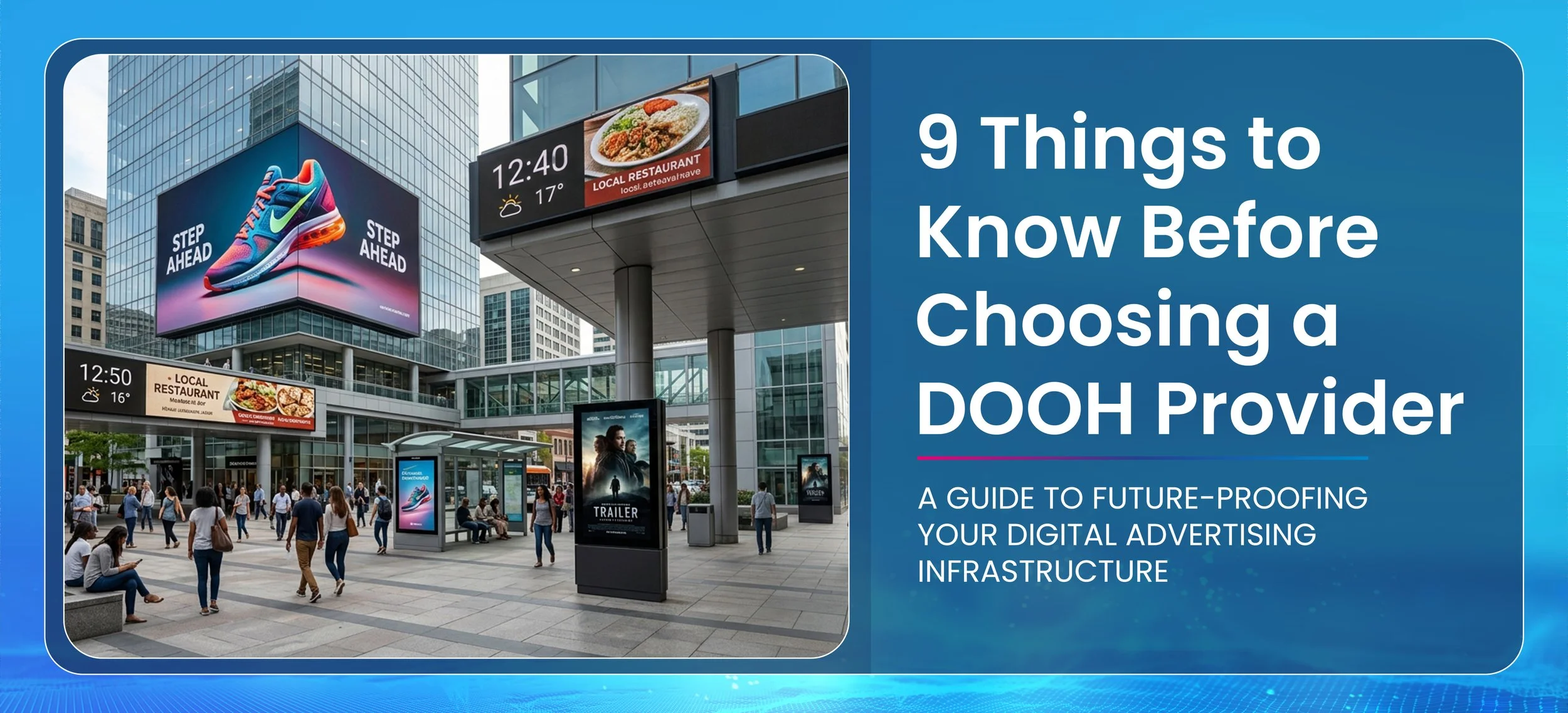
Key Takeaways:
Commercial displays built for digital signage & out-of-home advertising require hardware designed for continuous 16/7 to 24/7 operation.
Integrated System on Chip (SoC) screens eliminate external media players, reducing cabling, power requirements, and potential points of failure.
Power over Ethernet (PoE) technology simplifies installation by transmitting both power and data over a single Cat5e/Cat6 cable.
Cross-platform OS support—such as BrightSign, Android, Windows, and Linux—prevents software lock-in and protects long-term infrastructure investments.
Global distribution with regional warehousing in North America and Europe optimizes logistics and ensures reliable hardware availability for multi-site rollouts.
1. Verify Commercial-Grade Engineering vs. Consumer TV Modification
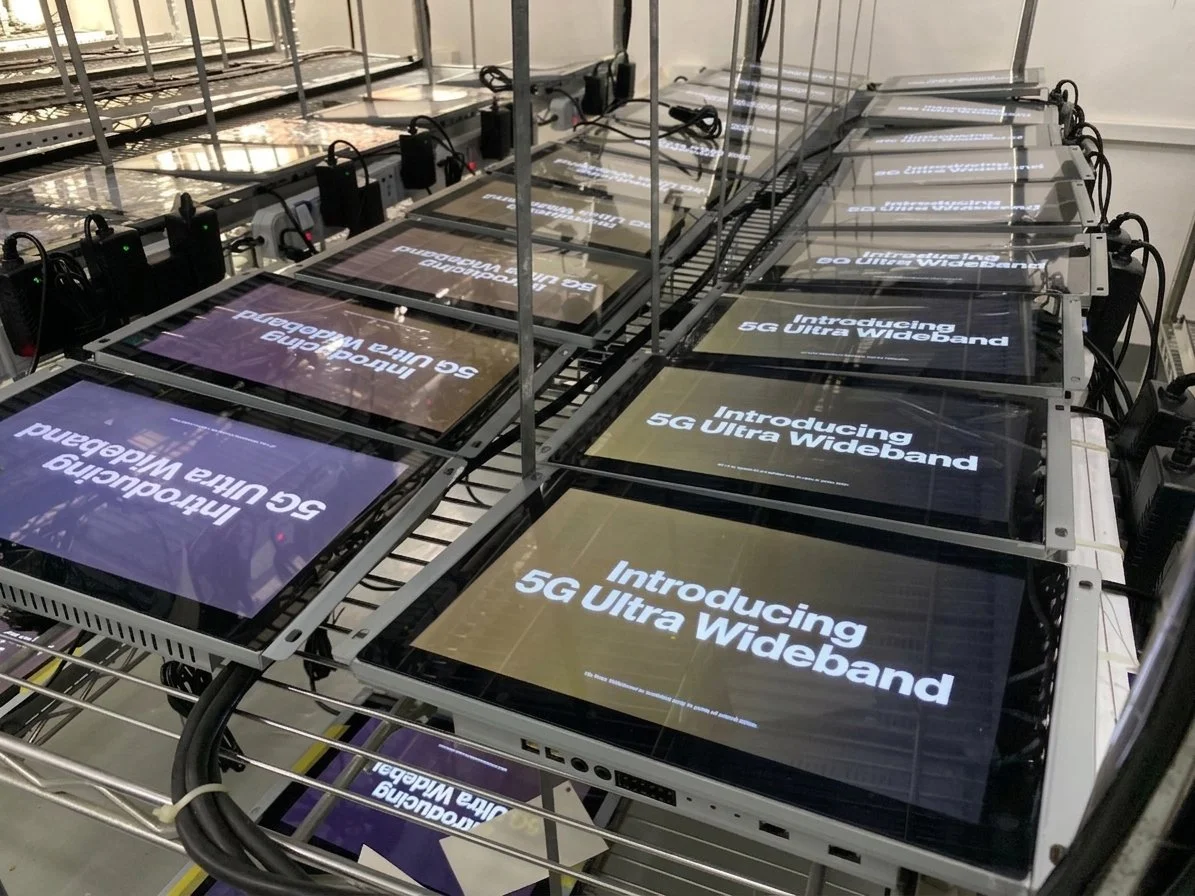
Procurement teams evaluating digital signage solutions must distinguish between modified consumer screens and purpose-built commercial hardware.
Consumer displays can work for short term installs where the screens will be swapped out regularly. However, they are not built for continuous runtime or high-traffic commercial environments so are not a good fit for longer term digital signage strategy.
Purpose-built digital signage & out-of-home advertising hardware features commercial-grade motherboards, high-brightness LCD panels, and advanced thermal cooling designed for continuous 24/7 operation. The advantage to working with a hardware provider that controls their design and manufacturing process is higher reliability, lower failure rates, and guaranteed component availability for long-term network expansions.
In summary, for digital signage out-of-home the choice is clear.
2. Assess System-on-Chip (SoC) Integration vs. External Player Overhead
Deployment efficiency in out-of-home advertising depends heavily on hardware architecture.
Traditionally, setups require mounting a separate external media player behind displays. The challenge is increased cabling, power connections, and labor costs.
Today, modern DOOH advertising networks utilize System on Chip (SoC) displays with built-in media players. This is a win for both integrators and designers. All-in-one displays streamline installation across multi-site rollouts, achieve slimmer display profiles, reduce cable management, and eliminate unnecessary hardware failure points.
Certainly, there are occasions when an external player is the right choice, but overall, a built-in SoC makes for a smoother install and a stylish look.

3. Require Power over Ethernet (PoE) Compatibility for Clean Installs
For indoor venues, retail fixtures, and venue-based digital billboard advertising, electrical wiring represents a significant installation expense. Selecting displays compatible with Power over Ethernet (PoE) allows a single Ethernet cable to deliver both high-speed data and DC power to the screen. Eliminating the need for dedicated AC electrical outlets drastically reduces electrician fees, simplifies compliance, and speeds up venue onboarding for advertising solution providers.
4. Ensure Cross-Platform Operating System Flexibility
Locking a network into a proprietary operating system limits future flexibility when changing content management systems (CMS) or ad-serving platforms. Enterprise digital signage solutions benefit from hardware that supports cross-platform operating systems. Selecting hardware compatible with BrightSign Built-In, Windows, Android, ChromeOS, or Linux ensures that DOOH advertising operators can adapt their software stack as media buyers and programmatic networks evolve.
5. Prioritize Remote Device Management (RDM) and Diagnostics
Maintaining high uptime across hundreds of screen locations requires robust remote device management. Operations teams should ensure hardware integrates with CMS platforms that offer real-time telemetry, remote health monitoring, playback verification, automated firmware updates, and remote reboot capabilities. Proactive diagnostic capabilities eliminate costly technician "truck rolls" and protect ad-revenue contracts by verifying proof-of-play remotely.
6. Evaluate Specialty Form Factors and Architectural Adaptability

Not every venue can accommodate standard 16:9 widescreen formats. Leading advertising solution providers offer diverse form factors, including ultrawide bar-type screens, square, circle, countertop, and dual-sided high-bright screens. Having access to custom and specialized display form factors enables designers to elevate unique architectural spaces, endcaps, columns, and transit hubs that standard displays cannot fit.
7. Confirm Regional Warehousing and Supply Chain Reliability
In recent years, supply chain disruptions and extended shipping lead times pose major risks to hardware deployment schedules. Procurement teams that are most successful have gotten adept at vetting providers based on their global distribution footprint and regional inventory reserves. Providers maintaining active warehousing in key regions, such as North America (Atlanta, GA) and Europe (Amsterdam, Netherlands), deliver faster order fulfillment, lower freight costs, and predictable replacement logistics.
8. Demand Pre-Configuration and Zero-Touch Provisioning
Field installation labor is one of the most variable costs in scaling a digital signage network. Leading hardware providers offer CMS preloading and pre-configuration services prior to shipping. Zero-touch provisioning allows field installers to simply mount the display, connect power/Ethernet, and automatically fetch network settings and media content without manual onsite setup.
9. Calculate Total Cost of Ownership (TCO) and Lifecycle Support
When looking at a project, teams have to work within their current budget while taking into account future possibilities and goals. Initial purchase price represents only a fraction of total display expenditure over a 5-to-7-year operational lifecycle. Procurement teams must calculate Total Cost of Ownership (TCO) by factoring in energy efficiency, failure rates, warranty coverage, and long-term spare parts availability. Partnering with established hardware manufacturers ensures dedicated technical support, simplified warranty fulfillment, and predictable return-on-investment across the entire network life cycle.
Connect: Bluefin Screens Can Make the Difference in Your Project
At Bluefin we know it is important to get what you want and what you need. Let’s go beyond the limitations of catalogue offerings and discover what is possible. Have an idea you’d like to try? Connect with us and let’s get started!